
Who is Natalie Harp, Trump's right-hand woman?
What the report says
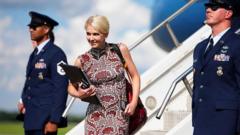
Natalie Harp, a longtime aide to Donald Trump, has been back in the spotlight after Democratic Georgia Senator Jon Ossoff referred to her close proximity to the president in a speech that spread widely online. BBC World News reports that Harp is one of Trump’s most loyal and longest-serving assistants, with a visible role in his second-term White House operation and on his travels.
According to the BBC, Harp is officially the president’s executive assistant, but her duties appear to extend beyond standard administrative work. She is said to handle some of Trump’s Truth Social posts, carry printed materials for him, and remain close to him during Oval Office appearances and trips. White House and media observers quoted in the report describe her as a kind of gatekeeper or “comfort blanket,” reflecting the degree of access she has to Trump.
The article traces Harp’s rise from a California conservative Christian background to prominence in Trump’s political world. She first drew attention after saying Trump’s Right to Try Act helped her access experimental treatment for bone cancer, a claim that boosted her standing among supporters. After Trump’s 2020 defeat, she worked at One America News Network before joining his next campaign.
BBC World News says Harp’s current prominence matters because it offers a window into how Trump receives information and how closely a small group of aides manages his communications. The White House has described her as trusted and valued, while Trump has rarely spoken publicly about her.
Loading debate for this article…
Other publishers covering this story
Related reporting
 Mamdani, Irish PM play bingo, ‘split the G’ in New YorkAl Jazeera
 Brazil’s Lula and Bolsonaro close campaigns ahead of critical electionAl Jazeera
 Iran war live: Yemeni forces strike Sanaa as Trump warns Tehran of hard wayAl Jazeera
 Why pastors may not be seen - or heard - preaching on Ghana's buses for much longerBBC Africa
 Cornell president says university 'must do better' after frat house rape allegationsBBC World News
 Why Canada is preparing for a (long shot) US invasionBBC World News