What this desert city can teach the world about tackling heat deaths
What the report says
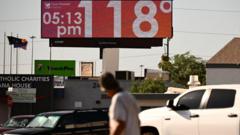
BBC World News reports that Phoenix and surrounding Maricopa County, Arizona, are being studied as a possible model for reducing deaths during extreme heat, as much of the US and Europe face unusually severe summer temperatures. The BBC cites recent heat-related mortality concerns in France, England and Wales, and the US, alongside warnings from scientists that climate change is making heatwaves more frequent, intense and persistent.
According to the BBC, Maricopa County has recorded some of the hottest conditions in the US and has spent years building heat-safety programmes. Phoenix became the first city globally to appoint a dedicated heat officer in 2021. County efforts have included cooling centres with longer opening hours, some operating around the clock, and programmes to repair or replace air-conditioning units for eligible residents, with a focus on people on low incomes or experiencing homelessness.
The BBC says confirmed heat-related deaths in the county fell from a high of 645 in 2023 to 405 in 2025, a decline experts partly link to policy changes. However, the article cautions that progress is not assured: as of 11 July this year, Maricopa County had 23 confirmed heat-related deaths and 282 more under investigation.
Experts quoted by the BBC said other cities could adapt parts of Phoenix’s approach, particularly by assigning clear responsibility for heat planning and improving coordination across agencies. They also warned that governments need to plan for future heat rather than past weather patterns, treating extreme temperatures as a public-health, infrastructure and economic challenge.
Loading debate for this article…
Other publishers covering this story
No additional verified coverage is currently clustered with this report.
Related reporting
 Kenya: 334 Children Still Missing As Kenya Records 1,251 Disappearances in 18 MonthsAllAfrica
 Nigeria: Nigeria Blessed With Gas, No Family Should Use Firewood for Cooking - MinisterAllAfrica
Nigeria: Exclusive - How Alleged Coup Plotters Planned to Recruit Repentant Boko Haram, Civilian JTF MembersAllAfrica
Nigeria: Nigeria Blessed With Gas, No Family Should Use Firewood for Cooking - MinisterAllAfrica
Nigeria: Exclusive - How Alleged Coup Plotters Planned to Recruit Repentant Boko Haram, Civilian JTF MembersAllAfrica
 What to Know About Project Sunrise, a 22-Hour Nonstop Flight Between London and SydneyNew York Times World
Tanzania: Mwanza Builds Stronger Disaster Response Network Through Awareness, Community ActionAllAfrica
Rwanda: Your Pension Doubled and That Smaller Pay Slip Is Good NewsAllAfrica
What to Know About Project Sunrise, a 22-Hour Nonstop Flight Between London and SydneyNew York Times World
Tanzania: Mwanza Builds Stronger Disaster Response Network Through Awareness, Community ActionAllAfrica
Rwanda: Your Pension Doubled and That Smaller Pay Slip Is Good NewsAllAfrica