
US says helicopter fired missiles to disable ship breaking Iran blockade
What the report says
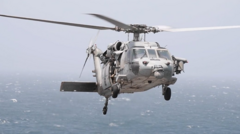
BBC World News reports that the US military says it used helicopter-fired missiles to disable a Panama-flagged cargo vessel in the Gulf of Oman after the ship tried to reach Iran despite repeated warnings. According to US Central Command, an MH-60 helicopter fired two Hellfire missiles at the M/V Vela Nova’s engine room, affecting the vessel’s steering gear and ending its transit toward Iran. The statement said the ship’s civilian crew did not comply with American warnings.
The reported incident comes amid an ongoing US blockade of Iranian ports, which Centcom says remains in force. The article says the US has been trying to stop commercial ships from reaching Iranian ports and that the Vela Nova was attempting to sail to an Iranian destination that was not named. Centcom also said that, as of 11 August, it had redirected 55 commercial vessels, disabled three non-compliant ships, and boarded two others.
The BBC notes that Iran had not publicly commented on the episode at the time of publication. The report also places the event in the wider context of tension in the Gulf and the Red Sea, including periodic exchanges of fire involving the US, Iran and Iran-aligned groups. Separately, Yemen’s internationally recognised government said six people were killed in a Houthi strike on another cargo ship, underscoring the continuing risk to shipping in the region.
Loading debate for this article…
Other publishers covering this story
No additional verified coverage is currently clustered with this report.
Related reporting
 More than one million people in Lebanon face acute food shortages, UN saysAl Jazeera
 Will Sheikh Hasina return to Bangladesh?Al Jazeera
 Zohran Mamdani’s influence grows as Democrats eye 2028 strategiesAl Jazeera
 Ireland fears undersea cables face growing threat from ‘malign actors’Al Jazeera
 Russia’s ambassador to US, Alexander Darchiev, dies at 66Al Jazeera
 Missing 11-month-old baby found buried alive in a crate in South CarolinaBBC World News