
Threat to oil tankers in Middle East worst since start of Iran war, analysts say
What the report says
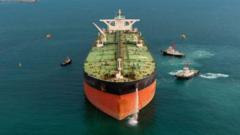
Analysts and shipping industry officials say the danger to oil tankers in the Middle East has reached its highest point since the Iran war began, as attacks on an alternative route have added to disruption in the region. The BBC reports that traffic through the Strait of Hormuz, a vital passage for global energy supplies, has fallen sharply, while more vessels have been “going dark” to reduce the chance of detection.
The pressure on shipping increased after a series of attacks in the Red Sea, where some tankers had shifted to avoid the Strait of Hormuz. According to the article, Yemen’s Houthi movement announced a blockade on Saudi Arabia’s Red Sea ports on 20 July, and the UK Maritime Trade Operations agency has reported several attacks in recent days. Industry figures quoted by BBC World News said the risk now extends across Saudi waters and parts of the Red Sea, making navigation and route planning more difficult.
The article says the reduced traffic through Hormuz followed a brief easing after a June peace deal with the US, before fighting resumed. Kpler data cited by the BBC showed far fewer ships crossing the strait than before the conflict, and only about four cargoes of crude bound for Asia per day, the lowest level since the war started. The publication also reported that restoring normal flows would likely take months even if the strait reopened, because shipping services have already been suspended and vessels redeployed.
The broader significance is that repeated attacks and political uncertainty are threatening one of the world’s most important oil shipping corridors, with consequences for freight markets and energy prices.
Loading debate for this article…
Other publishers covering this story
Related reporting
 Ebola spreads in DR Congo, putting neighbouring nations at riskAl Jazeera
 An unexpected welcome: Syrian Kurds return to their homes in AfrinAl Jazeera
 Republic of Ireland news conference delayed before controversial Israel gameBBC Sport Football
 Israel bans Arab parties from election: Who they are, why it mattersAl Jazeera
 Virat Kohli says he will retire from India cricket after 2027 World CupAl Jazeera
 ‘Super El Niño’ deepens hunger crisis in South Sudan says UNFrance24 Africa