
Reaction wheel failures leave Swift rescue mission spinning in orbit - Ars Technica
What the report says
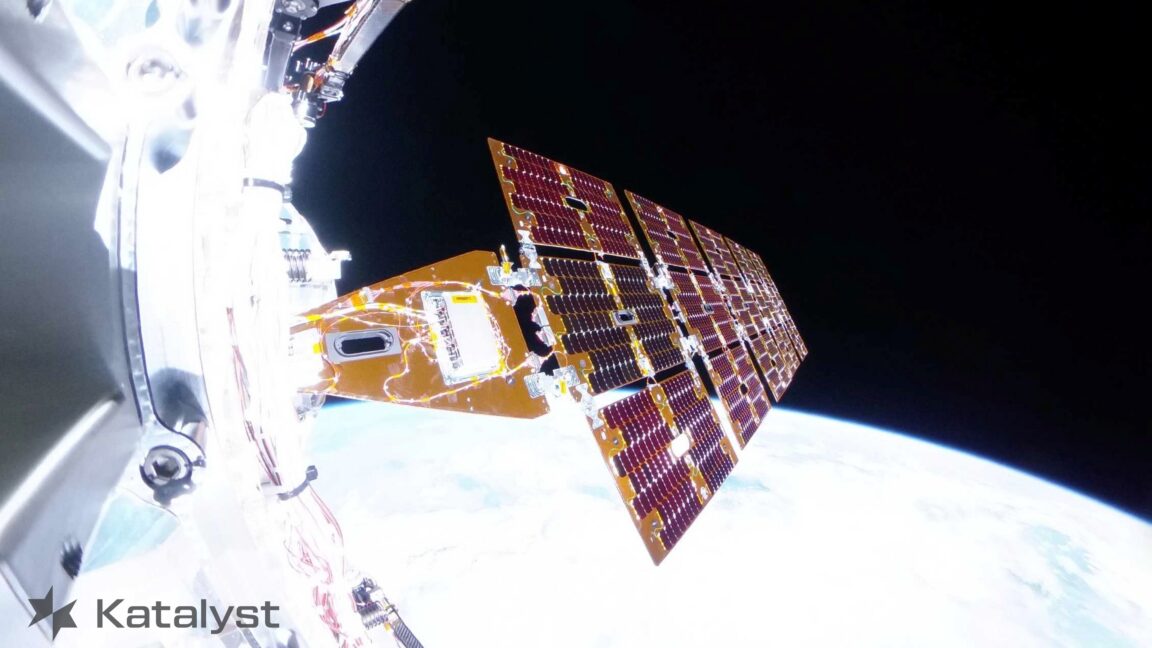
Ars Technica reports that Katalyst Space Technologies’ Link satellite, launched to raise the orbit of NASA’s aging Neil Gehrels Swift Observatory, has run into attitude-control trouble less than a month into its mission. NASA said Tuesday that Link began spinning over the weekend, causing intermittent communications, after problems emerged in systems used to control the spacecraft’s orientation. A preliminary review found that two of its three reaction wheels are not working, and NASA also reported reduced capability in the cold-gas thruster system.
The mission is intended to prevent Swift, a nearly 22-year-old gamma-ray observatory, from reentering Earth’s atmosphere in the coming months. Swift has no propulsion of its own, so Link was designed to rendezvous with it roughly 200 miles above Earth, attach using robotic arms and then use xenon electric thrusters to boost the telescope’s orbit. NASA is paying Katalyst $30 million for the service.
According to Ars Technica, Link launched July 3 on a Northrop Grumman Pegasus XL rocket and initially showed promising signs, including solar-array deployment, stable ground contact and early electric-thruster firings. Katalyst is now trying to use those electric thrusters to help stabilize Link, even though that was not their planned role.
NASA said the spacecraft is still producing enough power and remains in contact with ground teams, giving engineers time to assess options. If stable pointing can be restored, Katalyst plans to adjust its guidance, navigation and control approach and then, with NASA, evaluate whether a safe rendezvous and capture attempt remains possible. The effort is also being watched as a test of commercial satellite servicing under an unusually compressed development schedule.
Loading debate for this article…
Other publishers covering this story
No additional verified coverage is currently clustered with this report.
Related reporting
 Mystery son and disputed heir: Uganda’s king buried amid succession disputeAl Jazeera
 An Irish Castle Keeps a Piece of a Times Reporter’s PastNew York Times World
 One dead, 102 rescued after Indonesian ferry goes missing in Java SeaAl Jazeera
 1,400 Yemenis flee to Djibouti within 24 hoursAl Jazeera
 Wildfire rages on Croatia’s Dalmatian Coast island of BracAl Jazeera
 Along Himalayan Floods’ Path, Wiped Out Towns and Mounting GriefNew York Times World