Onesmus Mugyenyi: Uganda Isn't Losing Forests Because We Lack Laws—We're Losing Them Because Governance Is Failing
What the report says
Nile Post reports that ACODE Deputy Executive Director Onesmus Mugyenyi has argued Uganda’s continuing forest loss is driven less by a shortage of environmental laws than by weak governance, poor enforcement and limited community involvement. In an interview with Joshua Kagoro for the outlet’s Green Exclusives, Mugyenyi discussed ACODE policy briefs on natural resource governance and climate justice, with particular focus on West Nile and Karamoja.
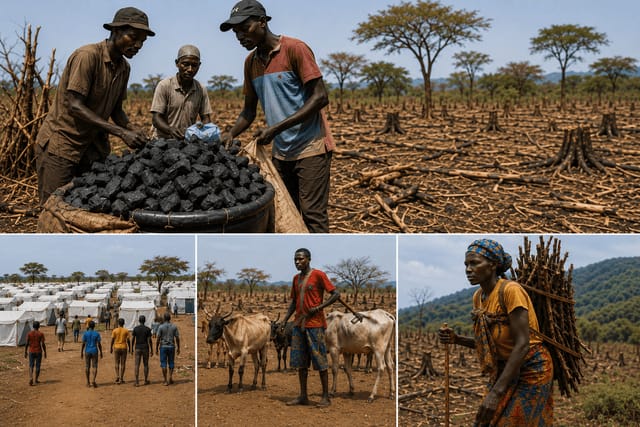
According to the report, ACODE’s research found that Uganda has built a substantial legal and policy framework for forest protection, but implementation remains inadequate. In West Nile, where the article says more than 1.5 million refugees have settled, forests including Zoka and Agoro-Agu face pressure from charcoal production, illegal logging, tobacco curing, farming expansion, firewood demand and construction needs. Nile Post cites ACODE estimates that Zoka lost almost 40% of its forest cover from 2001 to 2015, while parts of West Nile have annual deforestation rates above the national average.
For Karamoja, the article points to drought, fires, overgrazing, farming, charcoal burning and resource competition affecting landscapes such as Timu and Murungole Central Forest Reserves. Mugyenyi said ACODE’s fieldwork showed many nearby communities feel excluded from conservation decisions and do not see enough direct benefits from protecting forests, weakening local support.
The report frames climate justice as a fairness issue for people most exposed to climate shocks, including rural farmers, pastoralists, women, refugees and poorer communities. Mugyenyi also identified corruption, underfunded local governments, weak prosecution, limited information for citizens and short-term civil society projects as barriers to effective forest protection, saying long-term conservation depends on stronger accountability and public participation.
Loading debate for this article…
Other publishers covering this story
No additional verified coverage is currently clustered with this report.
Related reporting
 Something for you in cinemaThe Observer
 Bank of Uganda raises key interest rate as inflation risks mountThe Observer
 Uganda eyes global events marketThe Observer
 Behind Bars: KCCA officials remanded over Munyonyo land grabThe Observer
 Uganda’s $3.95bn Gold Exports Raise Questions Over Revenue, Local BenefitsNile Post
 Court Dismisses Cheffette Catering Appeal Against URA over Delayed Tax Review Application - ChimpReportsChimpReports