A woman who hadn't spoken an intelligible word in twenty years, silenced by a stroke, can form spoken sentences again — not by moving her mouth but through an experimental implant that reads the speech centres of her brain and turns her attempts to spea - Space Daily
What the report says
Space Daily reported on an experimental brain-to-voice implant that has enabled a woman who lost intelligible speech after a 2005 brainstem stroke to produce synthesized spoken sentences. The participant, publicly referred to as Ann and identified in the trial as BRAVO-3, is a former high school mathematics teacher from Canada. The work was described in a Nature Neuroscience paper published on 31 March 2025 by Kaylo Littlejohn, Cheol Jun Cho and colleagues, with Edward Chang of UCSF and Gopala Anumanchipalli of UC Berkeley as joint senior authors.
The system does not read thoughts or inner monologue, according to the account. A 253-electrode surface array over speech-related motor cortex detects signals generated when Ann tries to speak, even though she does not move her mouth. Software converts those signals into audio in short increments, using synthetic training targets and a pre-stroke wedding recording to make the voice resemble her own. Space Daily noted that the first sound can emerge about a second after detected speech intent, while other latency measures in the paper were longer depending on where timing begins.
The report emphasizes that this remains early-stage research. The published findings involve one participant, one implant location and one type of injury. Accuracy remains limited, expressive qualities such as pitch and intonation were not decoded in this system, and the device is investigational, wired to computers and not regulator-approved.
Space Daily also placed the study in a broader field that is advancing quickly, including separate UC Davis work using different implanted electrodes in a man with ALS. The key unanswered questions are whether streaming voice decoding can be replicated in other participants, made wireless, and used reliably outside lab conditions.
Loading debate for this article…
Other publishers covering this story
No additional verified coverage is currently clustered with this report.
Related reporting
 Mityana Residents Seek More Time to Register for Mosquito NetsNile Post
 Low Awareness Fuelling Late Detection of Autism in ChildrenNile Post
 Patient care at centre of govt’s planned health reforms - Daily MonitorDaily Monitor
Poverty and healthcare barriers expose Kiyindi women to reproductive health risks - PML DailyPML Daily
Patient care at centre of govt’s planned health reforms - Daily MonitorDaily Monitor
Poverty and healthcare barriers expose Kiyindi women to reproductive health risks - PML DailyPML Daily
 Muslim Youth Council to Launch Skilling Initiative to Tackle UnemploymentNile Post
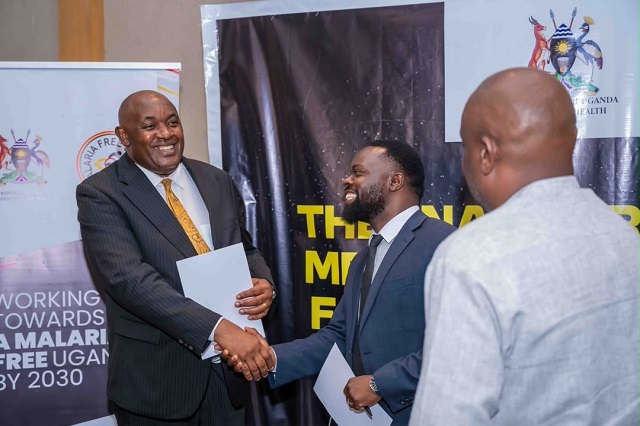 Feni joins leaders at Malaria Free Uganda board inaugurationThe Independent Uganda