Wakiso Leaders Urge Youth to Embrace Vocational Skills to Boost Incomes

What the report says
Wakiso District leaders have called on young people to take up vocational training and use it to start income-generating businesses, arguing that practical skills can help reduce dependence on formal employment and improve livelihoods. The appeal was made at a graduation ceremony in Bakka, Wakiso District, where trainees completed courses in areas such as cake making, tailoring, beauty therapy and hairdressing.
The event brought together district officials, graduates and trainers. Wakiso District Deputy Chairperson Edward Ntalo, speaking on behalf of the leadership, encouraged the new graduates to apply what they had learned and build self-reliance through work. He said vocational education can make it easier for people to launch small businesses and earn an income. Other guests at the ceremony also urged the graduates not to let the skills go unused.
The training was conducted by Alpha Uganda, a non-governmental organisation that says it works with communities to provide practical skills for livelihoods. Alpha Uganda team lead Tendo Sserwadda said many people, especially women, have the ability to contribute to their communities but need hands-on training to turn that potential into economic activity. Graduates thanked the organisation and pledged to use their new skills to support themselves and contribute to community development.
The report reflects a broader push in Uganda and elsewhere in East Africa to promote technical and vocational education as a path to youth employment, entrepreneurship and local economic growth.
Loading debate for this article…
Other publishers covering this story
No additional verified coverage is currently clustered with this report.
Related reporting
 Police investigate killing of 5-year-old child in Wakiso - Daily MonitorDaily Monitor
Police investigate killing of 5-year-old baby in Wakiso - Daily MonitorDaily Monitor
60% of Wakiso schools yet to join measles-rubella vaccination - Daily MonitorDaily Monitor
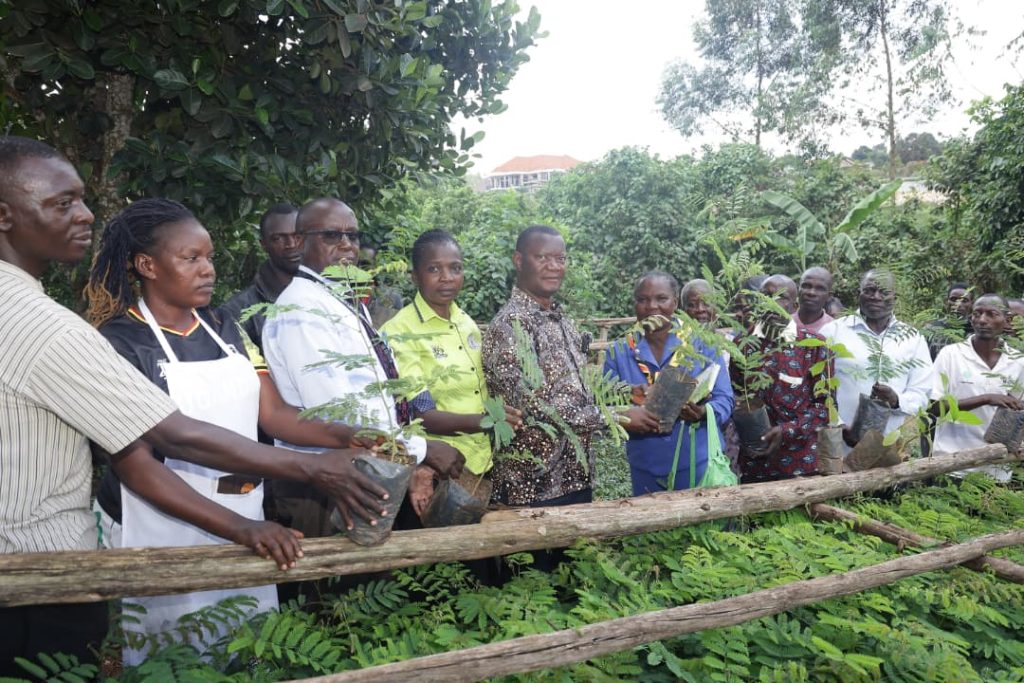 Wakiso District Distributes 50,000 Tree Seedlings to 52 Farmers to Boost Environmental Conservation.Wakiso District Local Government
 Wakiso District Local Government has donated 50,000 tree seedlings to 52 farmers as part of efforts to increase tree cover, restore degraded land and mitigate the effects of climate change in the rapidly urbanising district. The seedlings were distributed through the district’s Forestry Department under a tree-planting programme aimed at encouraging farmers, households, institutions and community groups to plant trees during every rainy season. The initiative comes amid increasing urbanisation in Wakiso, which has led to the cutting down of trees to make way for residential and commercial developments. Speaking during the handover of the seedlings at the district tree nursery, Wakiso District Chairperson Eng. Ian Kyeyune said the growing demand for timber and furniture products makes tree planting essential if the district is to protect its environment while meeting the needs of its expanding population. “It is impossible to avoid the demand for timber and furniture given the high rate of construction in Wakiso and the surrounding areas. This gives us a ready market for tree products,” Kyeyune said. He said planting more trees at household level, through farmer groups and institutions, is the most sustainable way of replacing trees cut down for construction, furniture and other purposes. Kyeyune urged more farmers to join the programme, particularly those living on the Bussi Islands, where he said environmental degradation remains a concern. “We need more farmers to come on board and become ambassadors for forest restoration. The trees we cut must be replaced if we are to protect our environment for future generations,” he said. The district chairperson also cautioned beneficiaries against selling the seedlings, urging them instead to nurture the trees as a long-term source of income. “Do not sell these seedlings. Nurture them and turn them into a business. In the long run, these trees can provide income while also helping us restore the environment,” Kyeyune said. The programme is also intended to improve household incomes, with farmers expected to grow trees for commercial purposes. The seedlings distributed include Mugavu, which is also beneficial to banana production; Kilundu; improved Muvule varieties used for furniture production; and exotic Eucalyptus varieties from South Africa, among others. Wakiso District Forestry Officer Harriet Nankya said tree planting is increasingly important as the district continues to experience rapid urban growth. Nankya warned that failure to increase tree cover could expose communities to some of the environmental challenges being experienced in other parts of the world. “Wakiso is one of the fastest-growing urban districts, and tree planting will help protect our people from some of the calamities being experienced in different parts of the world, especially in Europe and the Far East,” Nankya said. She encouraged farmers to seek guidance from forestry extension officers in their respective areas to ensure that the seedlings are properly planted, maintained and managed. The district says it intends to continue distributing tree seedlings during the rainy seasons as part of its broader efforts to promote environmental conservation and sustainable livelihoods in Wakiso.Nile Post
Wakiso gives 50,000 tree seedlings to farmers to boost forest coverNile Post