The concubine of a government official Part II

What the report says
The Observer published a first-person opinion-style piece titled “The concubine of a government official Part II,” presented as a continuation of a previous installment. In the article, the writer describes a long conversation in a café with a woman identified by the pseudonym Lucy Nabunya, who says she has been involved with a senior government official. The piece is set in Uganda and is framed as a reflective account of her remarks about the lifestyle and habits associated with such relationships.
According to the article, Lucy portrays the relationship as one of financial benefit, with gifts, travel and access to money, while also describing the official as rarely staying overnight. The conversation includes crude and sexualized details, but the broader point is a commentary on corruption, patronage and the personal conduct of some public officials. The writer also references an unresolved legal dispute with Makerere University, which adds a personal and political backdrop to the exchange.
The story does not identify the official and repeatedly suggests that several government figures could fit the description. It uses the woman’s account to criticize the broader culture of deal-making, favoritism and misuse of public resources. As background, Uganda’s public debate has often included concern about corruption and the overlap between political power and private benefit, which is the context the piece appears to engage, though The Observer’s article itself is written as commentary rather than formal reporting.
Loading debate for this article…
Other publishers covering this story
No additional verified coverage is currently clustered with this report.
Related reporting
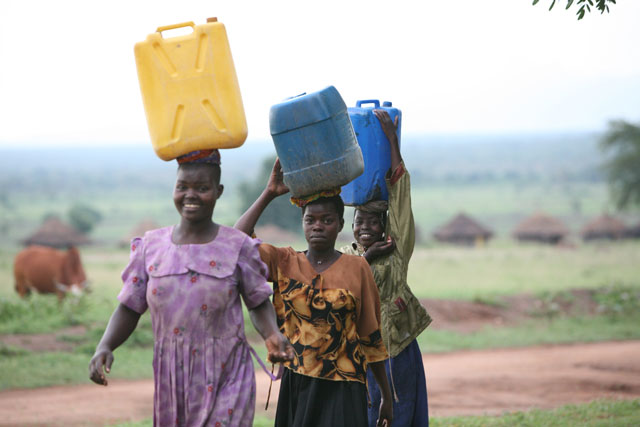 Water progress in Uganda leaves one in six villages behindThe Independent Uganda
 Hoima Authorities Warn of Arrests Over Illegal Market Stall DealsNile Post
 NRM MPs Seek Museveni’s Financial Support for Legal Fees in 75 Election Petitions - ChimpReportsChimpReports
 Over 50 SMEs Complete Green Jobs BootcampsNile Post
Government audits 5,000 buildings in Kampala, uncovers low compliance rates - Daily MonitorDaily Monitor
Over 50 SMEs Complete Green Jobs BootcampsNile Post
Government audits 5,000 buildings in Kampala, uncovers low compliance rates - Daily MonitorDaily Monitor
 Wakiso District Local Government has donated 50,000 tree seedlings to 52 farmers as part of efforts to increase tree cover, restore degraded land and mitigate the effects of climate change in the rapidly urbanising district. The seedlings were distributed through the district’s Forestry Department under a tree-planting programme aimed at encouraging farmers, households, institutions and community groups to plant trees during every rainy season. The initiative comes amid increasing urbanisation in Wakiso, which has led to the cutting down of trees to make way for residential and commercial developments. Speaking during the handover of the seedlings at the district tree nursery, Wakiso District Chairperson Eng. Ian Kyeyune said the growing demand for timber and furniture products makes tree planting essential if the district is to protect its environment while meeting the needs of its expanding population. “It is impossible to avoid the demand for timber and furniture given the high rate of construction in Wakiso and the surrounding areas. This gives us a ready market for tree products,” Kyeyune said. He said planting more trees at household level, through farmer groups and institutions, is the most sustainable way of replacing trees cut down for construction, furniture and other purposes. Kyeyune urged more farmers to join the programme, particularly those living on the Bussi Islands, where he said environmental degradation remains a concern. “We need more farmers to come on board and become ambassadors for forest restoration. The trees we cut must be replaced if we are to protect our environment for future generations,” he said. The district chairperson also cautioned beneficiaries against selling the seedlings, urging them instead to nurture the trees as a long-term source of income. “Do not sell these seedlings. Nurture them and turn them into a business. In the long run, these trees can provide income while also helping us restore the environment,” Kyeyune said. The programme is also intended to improve household incomes, with farmers expected to grow trees for commercial purposes. The seedlings distributed include Mugavu, which is also beneficial to banana production; Kilundu; improved Muvule varieties used for furniture production; and exotic Eucalyptus varieties from South Africa, among others. Wakiso District Forestry Officer Harriet Nankya said tree planting is increasingly important as the district continues to experience rapid urban growth. Nankya warned that failure to increase tree cover could expose communities to some of the environmental challenges being experienced in other parts of the world. “Wakiso is one of the fastest-growing urban districts, and tree planting will help protect our people from some of the calamities being experienced in different parts of the world, especially in Europe and the Far East,” Nankya said. She encouraged farmers to seek guidance from forestry extension officers in their respective areas to ensure that the seedlings are properly planted, maintained and managed. The district says it intends to continue distributing tree seedlings during the rainy seasons as part of its broader efforts to promote environmental conservation and sustainable livelihoods in Wakiso.Nile Post