Plasma proteome profiling identified biomarkers for the differential diagnosis and molecular staging of neurodegenerative dementias - Nature
What the report says
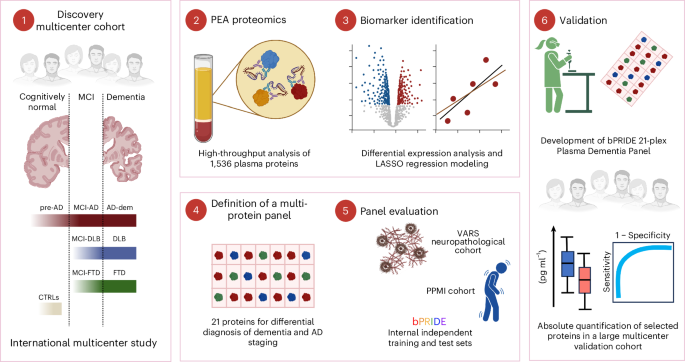
Nature reported that a large international proteomics study has identified blood-based protein patterns that may help distinguish among major neurodegenerative dementias, including Alzheimer’s disease, dementia with Lewy bodies and frontotemporal dementia. The study, called the blood Proteins for early Discrimination of dEmentias project, analyzed plasma samples from multiple cohorts and found more than 200 proteins whose levels differed across disease groups.
According to the article, the discovery phase included 1,318 plasma samples in the abstract, with detailed methods describing 1,277 participants after data cleaning from six international clinical cohorts. Researchers examined controls and people at different stages of Alzheimer’s disease, Lewy body dementia and frontotemporal dementia. Among the findings, glial fibrillary acidic protein rose most strongly across the Alzheimer’s continuum, integrin alpha-V and integrin alpha-M were lower in Lewy body disorders, and a pattern of higher neurofilament light chain with lower glial fibrillary acidic protein was linked to frontotemporal dementia.
The team then converted selected findings into a 21-protein quantitative multiplex panel and tested it in an independent multicenter validation group. Nature’s abstract gives the validation size as 805, while the main text describes a larger collected validation set with 722 individuals after cleaning, with one small autopsy cohort analyzed separately. The researchers also compared promising markers with neuropathology-related data from the Queen Sofia Foundation’s Vallecas Alzheimer Project and Parkinson’s Progression Markers Initiative data.
The study matters because dementia subtypes can look similar clinically, particularly early in disease or when pathologies overlap. Blood tests are generally easier to repeat and scale than many existing diagnostic approaches, but the article frames these results as support for biomarker-based differential diagnosis and staging rather than as a standalone clinical test ready for routine use.
Loading debate for this article…
Other publishers covering this story
No additional verified coverage is currently clustered with this report.
Related reporting
 Medicine shortages undermining village health teamsThe Observer
 Depression: Walking Through the Three Corners of Life Toward HealingNile Post
 Ebola: Uganda Reinstates Traveller Locator FormsNile Post
 Uganda remains Ebola-free as Health ministry probes Nigerian traveller infected with virus - Daily MonitorDaily Monitor
 Atwine Warns Border Officers Over Ebola Screening Lapses at MpondweNile Post
 Rising patient numbers strain Bulucheke Health Centre IVThe Independent Uganda