
NASA astronaut, 2 cosmonauts return to Earth after 241 days on space station - space.com
What the report says
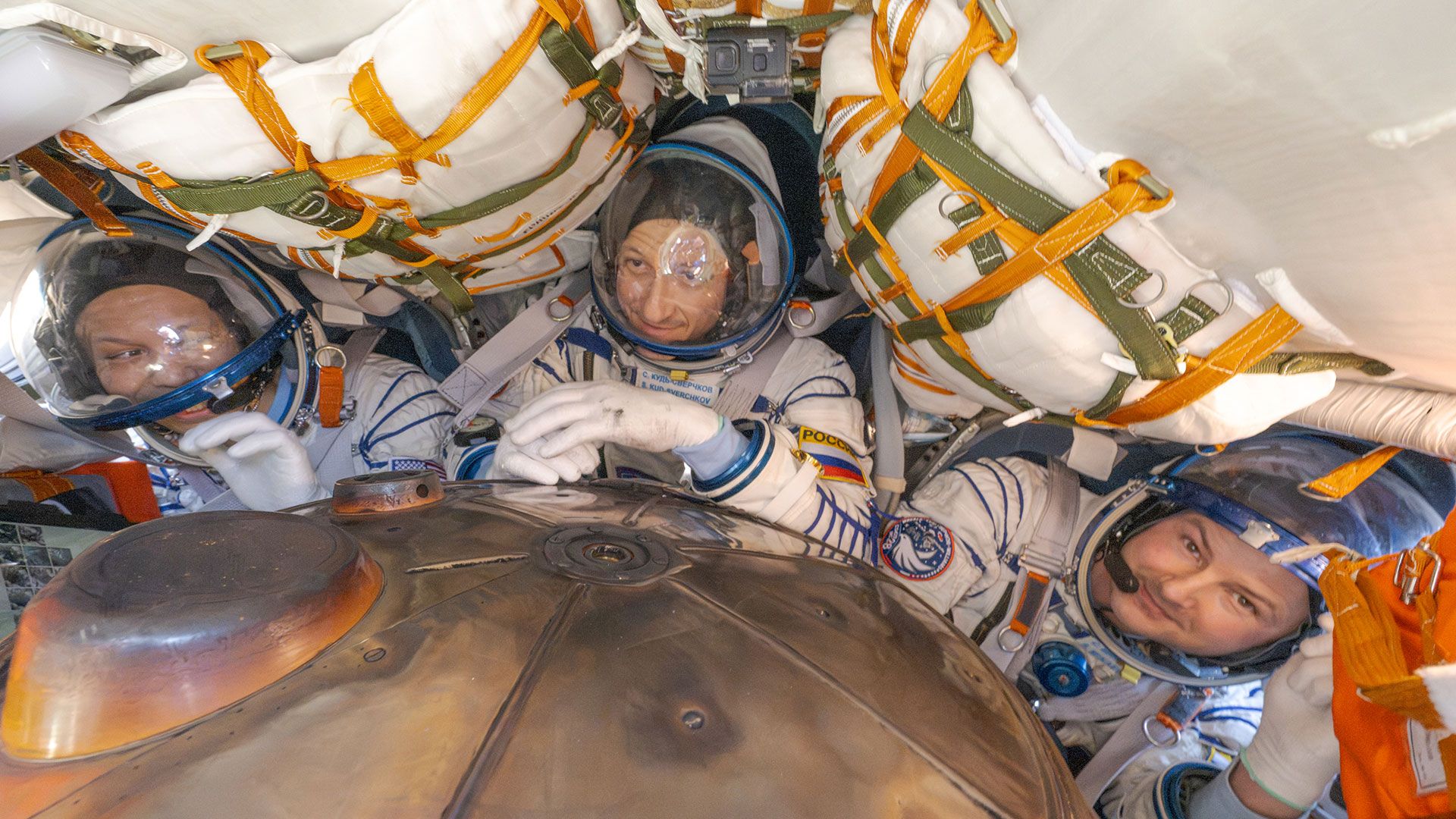
Space.com reported that a three-person U.S.-Russian crew returned from the International Space Station early Sunday, July 26, after spending 241 days in orbit. NASA astronaut Chris Williams and Roscosmos cosmonauts Sergey Kud-Sverchkov and Sergei Mikaev departed aboard the Soyuz MS-28 spacecraft, which separated from the ISS at 3:03 a.m. EDT and touched down in Kazakhstan at 6:27 a.m. EDT, about three and a half hours later.
The landing took place on the Kazakh steppe near Dzhezkazgan, according to the report, with NASA imagery showing the crew after recovery. Before departure, the station crew held a change-of-command ceremony Saturday in which Kud-Sverchkov transferred command to NASA astronaut Jessica Meir. Space.com said that marked the handover from Expedition 74 to Expedition 75, with the new expedition beginning when Soyuz MS-28 undocked.
Soyuz MS-28 launched to the station on Nov. 27, Thanksgiving Day, beginning the first spaceflight for Williams and Mikaev and the second for Kud-Sverchkov. Space.com reported that Kud-Sverchkov has now accumulated 426 days and 9 minutes in space. During this mission, the returning trio completed 3,856 Earth orbits and traveled more than 102 million miles, or 164 million kilometers.
After landing, recovery teams were to fly the crew by helicopter to Karaganda, Kazakhstan. Williams was expected to continue to NASA’s Johnson Space Center in Houston, while Kud-Sverchkov and Mikaev were headed to Star City, Russia. The return underscores the continued use of Soyuz spacecraft for crew transport and ongoing NASA-Roscosmos cooperation aboard the ISS.
Loading debate for this article…
Other publishers covering this story
No additional verified coverage is currently clustered with this report.
Related reporting
 Ballon d’Or 2026 predictions: Yamal, Mbappe and Kane – who will win?Al Jazeera
 Lula thanks Brazil’s youth for historic election winAl Jazeera
 Brazil election results 2026: Key takeaways from Lula’s historic winAl Jazeera
 Seoul ‘fabricated” landmine blast, North Korea tells UN in letterAl Jazeera
 Two storms slam northern Europe, cut power to 150,000 homesAl Jazeera
 Netanyahu rival Eisenkot holds final rally before Israeli electionAl Jazeera