Mapping in-cell protein contact sites reveals hijacking of paraspeckles during influenza A virus infection - Nature
What the report says
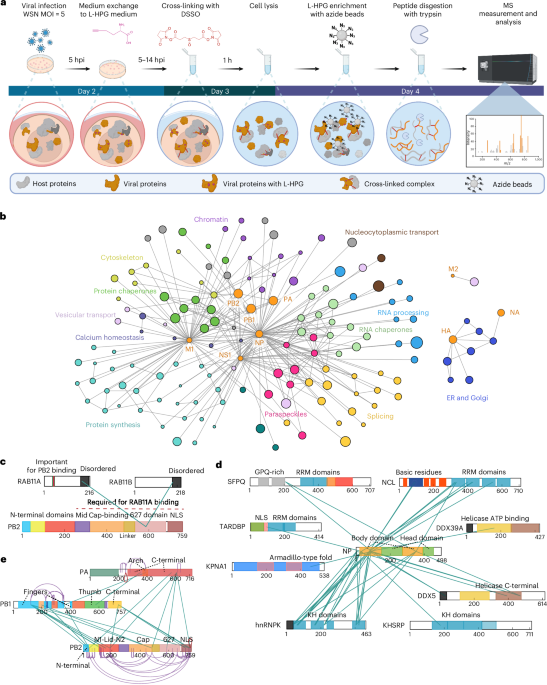
Nature reported on a study mapping how influenza A virus interacts with human cell proteins during infection, using in-cell cross-linking mass spectrometry combined with structural modelling and functional assays. The research examined infected human lung epithelial cells and focused on protein contacts in their native cellular setting, rather than after cells had been broken open for analysis.
The team used a method called structural host–virus interactome profiling to enrich newly made viral proteins and identify contact sites between viral and host proteins. In experiments with the A/WSN/33 (H1N1) influenza strain, cells were labelled from 5 to 14 hours after infection and cross-linked at 14 hours, a window the authors describe as capturing late-stage viral genome export, transport through the cytoplasm and virion assembly. The work produced a virus-centred interaction map across many viral–host protein pairs.
According to the Nature article, the analysis identified host factors connected to maturation of different forms of haemagglutinin, the viral surface glycoprotein, as it moves through the endoplasmic reticulum and Golgi system. The study also reported LAT1 as a membrane-associated interactor of the viral M2 protein.
A central finding was that influenza A infection progressively disrupts paraspeckles, nuclear membraneless compartments organized around long non-coding RNA. The authors link this to viral nucleoprotein and NS1 contacts with paraspeckle proteins, PA-X degradation of paraspeckle-associated long non-coding RNA, and inhibition of RNA polymerase II. They conclude that dismantling these nuclear structures releases host factors that help influenza replicate, offering a more spatially detailed view of how the virus remodels host cell compartments.
Loading debate for this article…
Other publishers covering this story
No additional verified coverage is currently clustered with this report.
Related reporting
 Atwine Warns Border Officers Over Ebola Screening Lapses at MpondweNile Post
 Rising patient numbers strain Bulucheke Health Centre IVThe Independent Uganda
 Health officials race to trace source of Nigeria's Ebola infection - Daily MonitorDaily Monitor
 Uganda Martyrs Hospital Unveiled in Honour of Late Bishop WamikaNile Post
U.S. to Reduce Health Aid to Kenya as Nairobi Takes Over HIV, Malaria Funding - ChimpReportsChimpReports
Mubende hospital restricts number of caregivers to tackle overcrowding - Daily MonitorDaily Monitor
Uganda Martyrs Hospital Unveiled in Honour of Late Bishop WamikaNile Post
U.S. to Reduce Health Aid to Kenya as Nairobi Takes Over HIV, Malaria Funding - ChimpReportsChimpReports
Mubende hospital restricts number of caregivers to tackle overcrowding - Daily MonitorDaily Monitor