Leaked UN straw poll puts Otunnu in play as secretary-general race heads for deadlock
Full report
NEW YORK — A confidential August 21 UN Security Council straw poll has pushed the race for the next UN secretary-general into a more uncertain phase, with leaked tallies showing that none of the eight active candidates reached the nine-vote minimum required for a formal Council recommendation. The result leaves the 15-member Council facing an autumn contest shaped less by outright popularity than by which candidate can survive resistance from the permanent five powers.
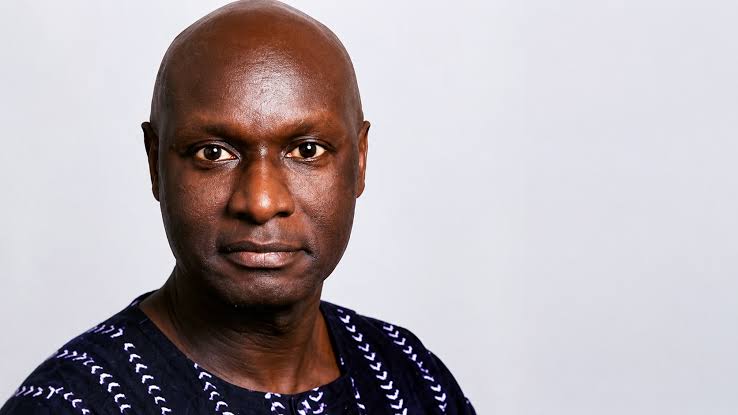
As the smoke clears from the highly confidential ballot, the leaked figures have also recast the field around a late rise by Uganda’s Olara Otunnu, whose balanced 5 encourage, 5 discourage and 5 no-opinion split placed him behind the numerical frontrunners but gave his campaign a sharper trajectory than rivals who appear to have stalled or fallen back. In the selection politics of the United Nations, the notes suggest, momentum and veto resistance may matter as much as the first-place position in an early poll.
The Security Council’s straw polls are not final votes, and the August 21 exercise did not produce an official nominee. The process is designed to test whether a candidate can command at least nine votes and avoid a fatal objection from any permanent member. The leaked tally, however, offers an unusually detailed look at how Council members are sorting the contenders before the next round, expected in mid-to-late September 2026.
According to the figures, Carolyn Rodrigues Birkett of Guyana leads on raw support, with 8 encourage votes, 3 discourage votes and 4 no-opinion marks. Rebeca Grynspan of Costa Rica follows with 7 encourage, 5 discourage and 3 no-opinion votes, while Rafael Grossi of Argentina also has 7 encourage votes but faces 6 discourage marks and 2 no-opinion votes. Otunnu’s 5-5-5 split puts him fourth in the immediate count, but not necessarily fourth in the longer game.
The lower half of the board shows far steeper resistance. Michelle Bachelet of Chile registered 2 encourage votes, 10 discourage votes and 3 no-opinion marks. Macky Sall of Senegal recorded 3 encourage, 9 discourage and 3 no-opinion votes. Ivonne A-Baki of Ecuador received no encourage votes, 8 discourage marks and 7 no-opinion votes, while María Fernanda Espinosa, also of Ecuador, drew 2 encourage votes, 10 discourage votes and 3 no-opinion marks.
The numbers point to a Council that is using discouragement votes aggressively to narrow the contest. Across the eight candidates, the leaked table counts 56 discourage marks, a signal that members are not merely ranking preferences but also testing who should remain viable. In that environment, candidates with high visibility but fixed opposition can become more vulnerable than candidates who have not yet been fully defined.
Otunnu’s rise is the main change identified between the July and August polls. The notes say he moved from 2 positive votes in July to 5 positive votes on August 21, despite being nominated late on July 24 and having little time for the kind of capital-to-capital campaign that other major candidates had already conducted. His two New York engagements immediately before the poll were an August 19 General Assembly dialogue and an August 20 private briefing with the Security Council.
That late movement is central to the argument that Otunnu has become a serious compromise candidate rather than a symbolic entrant. A 5-5-5 score does not make him the frontrunner on the ballot sheet, and it still leaves him short of the required threshold. But it suggests that his support base is expanding at the moment when several better-known contenders are facing hardening opposition.
The first part of Otunnu’s advantage, according to the campaign analysis, is geopolitical fit. The winner does not need unanimous affection in the Council; the candidate must avoid becoming unacceptable to any of the permanent five. The notes describe Otunnu as an independent African statesman whose profile may be legible to China and Russia, while Uganda’s security and counter-terrorism ties in East Africa give Washington and London reasons not to treat him as hostile.
France is presented as another important piece of the calculation. The notes say Paris has historically used language as a cultural and political filter, especially against candidates unable to speak French. Otunnu’s complete fluency in French is therefore described as a shield that removes a familiar line of objection and allows his candidacy to circulate across both Anglophone and Francophone diplomatic networks.
His education is also framed as part of that bridge. The notes cite an elite legal pedigree spanning Oxford and Harvard, a background that may help him communicate with Western diplomatic circles without alienating states that prefer a more multipolar order. In a race dominated by veto calculations, such cross-system familiarity can be more valuable than a larger but brittle bloc of first-round support.
A second factor is timing. Otunnu entered the active race late, meaning Council members have had less opportunity to organize firmly against him. The notes contrast his compressed campaign with other candidates who have spent much longer building coalitions, making them more visible to opponents as well as supporters.
The August performance therefore matters not only because of the votes he received, but because of how quickly they arrived. Moving from the bottom tier in July to a balanced position in August after one public dialogue and one Council briefing gives his team room to argue that his ceiling has not yet been tested. It also allows supporters to present him as fresh, while competitors carry the burden of prior expectations.
A third element is institutional memory. In 1981, when he was Uganda’s Permanent Representative to the United Nations, Otunnu proposed the secret straw poll mechanism now being used in the selection process. That history gives his campaign an unusual narrative: he is being evaluated through a system he helped design, and his supporters can argue that he understands the psychology of the Council from the inside.
The same leaked tally shows why Rodrigues Birkett, despite leading, is in a delicate position. Her 8 encourage votes put her one short of the minimum needed to secure a formal recommendation, but the notes describe that number as a possible ceiling rather than a launchpad. With 3 discourage votes already recorded, any future attempt to push past 8 could reveal whether the resistance is ordinary hesitation or a permanent-member barrier.
Grynspan’s position is different but also weakened by the direction of travel. She is reported to have fallen from 10 positive votes in July to 7 in August, a drop that the notes describe as dangerous for an establishment candidate. A candidate who once appeared to command broad support can struggle to recover if Council members begin to read decline as evidence of vulnerability.
Grossi’s challenge is more direct. His 7 encourage votes place him level with Grynspan on positive support, but the 6 discourage votes against him represent a heavy negative load. The notes interpret that opposition as evidence of a likely shadow veto from a major power, with Russia named as the likely source, though the leaked table itself does not record which members cast which marks.
Bachelet and Espinosa appear to face the hardest arithmetic, each carrying 10 discourage votes against only 2 encourage votes. Sall’s 9 discourage votes and 3 positive marks also place him deep in the danger zone. A-Baki’s zero encourage votes amount to immediate rejection in the leaked matrix, although the notes do not specify whether any of the lower-tier candidates plans to withdraw.
For Uganda and the wider East African diplomatic community, Otunnu’s showing gives the race a sharper regional focus. The notes present him as the late-hour wildcard from East Africa and the candidate with the highest probability grade, 7 out of 10, ahead of Rodrigues Birkett’s 5, Grynspan’s 4 and Grossi’s 3. All four lower-tier candidates are rated at 1.
Those grades are analytical judgments, not official UN standings. They reflect an assessment that Otunnu is less exposed to interlocking vetoes than candidates with higher current support. They also assume that the Council will prefer a relief-valve candidate if the leading contenders neutralize one another in later ballots.
Still, the leaked ballot leaves major questions unanswered. It does not identify the countries behind the encourage, discourage or no-opinion marks, and it does not show whether any permanent member is already prepared to block a specific candidate formally. It also does not indicate how far Otunnu’s new support can grow once rival campaigns adjust to his emergence.
The next round, expected in mid-to-late September 2026, is therefore likely to test two things at once: whether the apparent frontrunners can break through the nine-vote line, and whether Otunnu can convert momentum into a broader Council coalition. If no candidate moves decisively, pressure may increase on the weakest contenders to step aside and allow the race to consolidate.
For now, the race remains an attrition game. Rodrigues Birkett has the lead, Grynspan and Grossi retain meaningful support, and several candidates are carrying prohibitive negatives. Otunnu’s position is more ambiguous but increasingly consequential: he is short of the threshold, yet he is the candidate whose direction of travel has most altered the board.
Loading debate for this article…
Other publishers covering this story
No additional verified coverage is currently clustered with this report.
Related reporting
 PFF Denies Talks With Salim Saleh Over Besigye’s Release - ChimpReportsChimpReports
UPDF Warns of Truck Auction Over Repeat Charcoal Offences - ChimpReportsChimpReports
PLU Threatens to Reconsider NRM Alliance - ChimpReportsChimpReports
Bogere strikes foot into Afcon squad - Daily MonitorDaily Monitor
Wakiso: Two Arrested After Child Is Kidnapped for Shs20m Ransom - ChimpReportsChimpReports
Shift focus from disaster relief to prevention, Tayebwa tells MPs - Daily MonitorDaily Monitor
PFF Denies Talks With Salim Saleh Over Besigye’s Release - ChimpReportsChimpReports
UPDF Warns of Truck Auction Over Repeat Charcoal Offences - ChimpReportsChimpReports
PLU Threatens to Reconsider NRM Alliance - ChimpReportsChimpReports
Bogere strikes foot into Afcon squad - Daily MonitorDaily Monitor
Wakiso: Two Arrested After Child Is Kidnapped for Shs20m Ransom - ChimpReportsChimpReports
Shift focus from disaster relief to prevention, Tayebwa tells MPs - Daily MonitorDaily Monitor