KIZITO SIMON NJAYE: LIVING LIKE DOMESTIC ANIMALS: POVERTY, CLIMATE CHANGE AND EVERYDAY SURVIVAL

What the report says
Watchdog Uganda published an opinion-style article by Kizito Simon Njaye examining how poverty, climate change and weak infrastructure combine to make everyday life a struggle for basic needs. The piece uses the provocative phrase “living like domestic animals” as a metaphor for deprivation, not as a judgment on people’s dignity. It argues that many households in developing countries face conditions similar to those of animals kept by humans: searching daily for food and water, needing shelter from heat and rain, and depending on whether treatment or support is affordable when illness strikes.
The article places this discussion within a broader framework of human and animal ecology. It says people and animals both rely on land, water, food systems and healthy ecosystems, while deforestation, overgrazing, pollution and wetland destruction can worsen scarcity and disease. It also points to climate change as a major driver of hardship, especially in Africa and other parts of the developing world where poverty, unemployment and fragile infrastructure often overlap.
Njaye frames poverty as more than low income, describing it instead as restricted choices, uncertainty and constant vulnerability. The article cites international references, including the World Organisation for Animal Health, the UN Development Programme and the World Bank, to support its argument that climate shocks and poverty reinforce each other. The broader significance, the piece suggests, is that development cannot be meaningful if families still lack water, housing, healthcare and food security.
Loading debate for this article…
Other publishers covering this story
No additional verified coverage is currently clustered with this report.
Related reporting
 Kabaka’s Education Minister Warns Teachers Against Exam MalpracticeNile Post
 Parents, stakeholders back extra fees to save falling standards in Tororo UPE schools - Daily MonitorDaily Monitor
 Sheikh Abdul-Karim Katamba Appointed Makerere University ImamNile Post
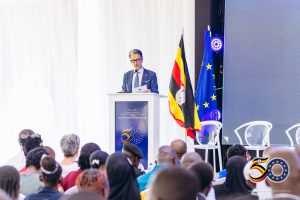 ‘Investment in Young People is one of the Wisest Investments Any Society Can Make’SoftPower News
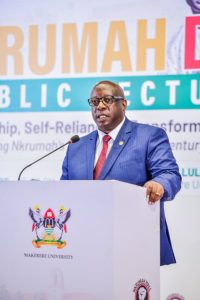 Prof Karyeija: African Leadership Must Be About Service, Not PowerSoftPower News
Nigeria offers free university professors to boost Uganda’s higher education sector - Daily MonitorDaily Monitor
Prof Karyeija: African Leadership Must Be About Service, Not PowerSoftPower News
Nigeria offers free university professors to boost Uganda’s higher education sector - Daily MonitorDaily Monitor