
Israel and the cost paradox of the Iran war

What the report says
Al Jazeera published an opinion article by Abdulla Banndar Al-Etaibi on July 26, 2026, arguing that Israel has faced comparatively limited direct costs in the five-month US-Israeli war with Iran, which the author says began on February 28. The piece frames the conflict as a “cost paradox”: Iran, Gulf states, Asian and Arab energy consumers, and US forces are described as absorbing much of the damage, while Israel benefits strategically and economically.
According to the article, Iran’s long-running reliance on allied armed groups and proxy forces has been weakened. It says Hezbollah entered the conflict after prior exhaustion, Iraqi pro-Iran factions suffered in US strikes, and the Houthis have been drawn toward attacks on Saudi interests rather than directly targeting Israel or US naval forces. The author argues this has left Iran more isolated and reduced the value of the regional network it built over decades.
The article also says Israel’s own home front has become less exposed after early Iranian missile attacks, with Iranian strikes instead focused on infrastructure in Gulf states and Jordan. It credits Israeli and US air defence systems with limiting early damage and says continuing US strikes have increased pressure on Iran’s military capabilities while sparing Israel equivalent retaliation.
On the economic side, Al-Etaibi cites Bank of Israel growth forecasts of 4 percent in 2026 and 5.5 percent in 2027, a stronger shekel, record levels on the Tel Aviv-35 index, Google’s $32bn Wiz acquisition, and Israeli defence exports of $19.2bn in 2025. The author acknowledges higher defence costs and mobilisation burdens, but argues Israel’s gains currently outweigh its losses. The piece is labelled opinion, not Al Jazeera’s editorial position.
Loading debate for this article…
Other publishers covering this story
No additional verified coverage is currently clustered with this report.
Related reporting
 Violent clashes as Albanian government cracks down on protestsAl Jazeera
 Could Israel’s military crackdown influence Tuesday’s election?Al Jazeera
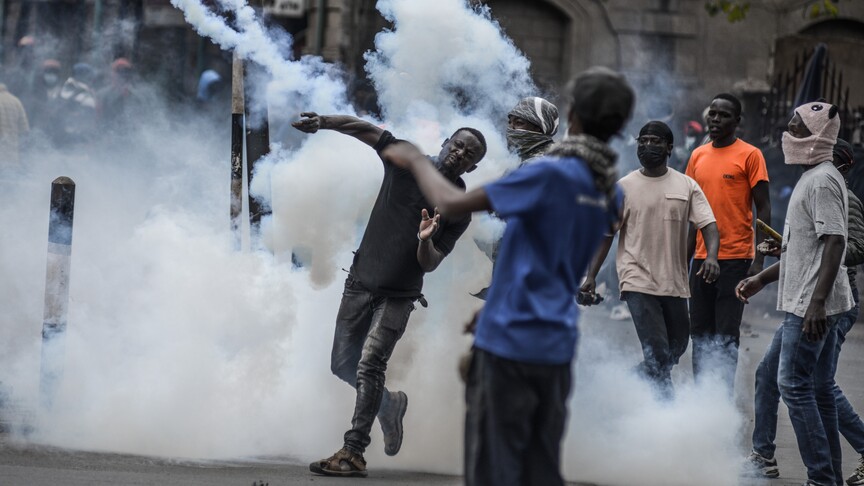 Over 14,000 flee Ethiopia clashes into Kenya as death toll feared to riseAnadolu Agency Africa
 Arsenal join Man City at Premier League summit, Spurs shock Chelsea 2-0Al Jazeera
 Fireworks and tear gas as protesters and riot police clash in ParisBBC World News
 Thousands of Israelis rally against Netanyahu gov’t days before electionAl Jazeera