How Closed-Loop BCIs Will Treat Depression, Anxiety, and PTSD - Neuroscience News
What the report says
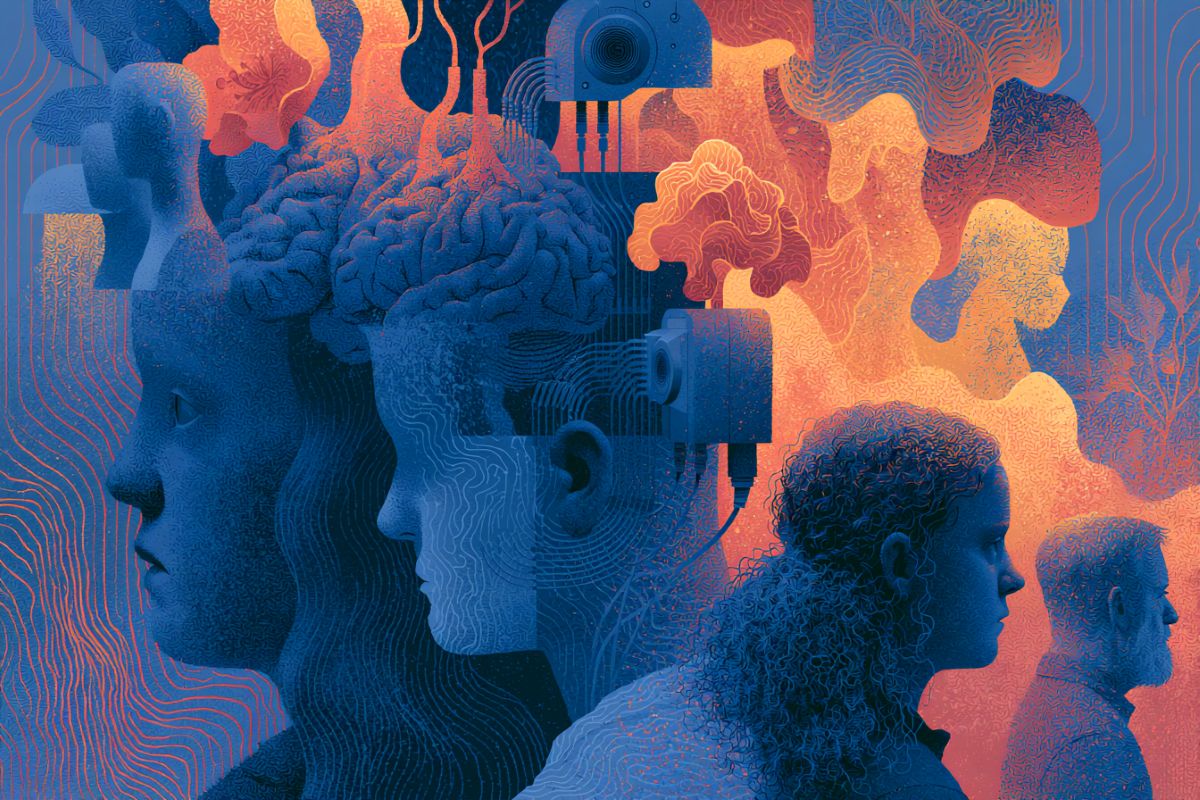
Neuroscience News reported on a perspective review proposing a roadmap for “cognitive” brain-computer interfaces, or BCIs, aimed at psychiatric and cognitive conditions such as depression, anxiety, post-traumatic stress disorder and obsessive-compulsive disorder. The article says the review, published in Trends in Cognitive Sciences, was authored by Ignacio Saez, PhD, of the Icahn School of Medicine at Mount Sinai, where he directs the Laboratory for Human Neurophysiology.
The central argument is that systems designed to restore movement or speech in people with paralysis cannot simply be transferred to mental health treatment. Motor BCIs often decode signals from relatively stable, well-characterized areas of motor cortex. By contrast, attention, memory, decision-making and emotion involve shifting networks across multiple brain regions, and the meaning of a signal may change depending on context.
According to the report, Saez’s proposed next step is a closed-loop model that combines real-time brain-signal decoding with adaptive neuromodulation. Such systems would be intended to identify emerging harmful states, such as anxiety spikes or depressive episodes, and respond with carefully timed electrical or neurochemical stimulation. The article notes that relevant components already exist in clinical or research settings, including intracranial recording, adaptive deep brain stimulation and neurochemical sensing, but integrating them into reliable implanted systems remains a major challenge.
The development matters because psychiatric and cognitive disorders affect far larger patient populations than severe paralysis, drawing attention from academic groups, clinicians, startups and established neurotechnology companies. Neuroscience News also reported that clinical translation would require not only scientific advances, but collaboration on hardware, algorithms and regulatory pathways before such cognitive BCIs could become approved therapies.
Loading debate for this article…
Other publishers covering this story
No additional verified coverage is currently clustered with this report.
Related reporting
 256 Mall gives Ugandan shoppers one place to discover local sellers, products and services256 Mall
256 Mall gives Ugandan shoppers one online place to discover sellers, prices and local options256 Mall
256 Mall gives Ugandan shoppers one place to discover local sellers, products and services256 Mall
256 Mall gives Ugandan shoppers one online place to discover sellers, prices and local options256 Mall
 Digital number plates: MPs move to verify tracking system as police report 90% vehicle recovery rate - Daily MonitorDaily Monitor
256 Mall guide: one web mall for browsing Uganda’s local sellers by category, location and shop256 Mall
Digital outreach methods are quietly transforming modern voter mobilization efforts - ChimpReportsChimpReports
Uganda Arrests 365 Foreigners in INTERPOL Africa Cybercrime Crackdown - ChimpReportsChimpReports
Digital number plates: MPs move to verify tracking system as police report 90% vehicle recovery rate - Daily MonitorDaily Monitor
256 Mall guide: one web mall for browsing Uganda’s local sellers by category, location and shop256 Mall
Digital outreach methods are quietly transforming modern voter mobilization efforts - ChimpReportsChimpReports
Uganda Arrests 365 Foreigners in INTERPOL Africa Cybercrime Crackdown - ChimpReportsChimpReports