Distinct brain regions mediate regulation of food intake in response to GIPR agonism or antagonism - Nature
What the report says
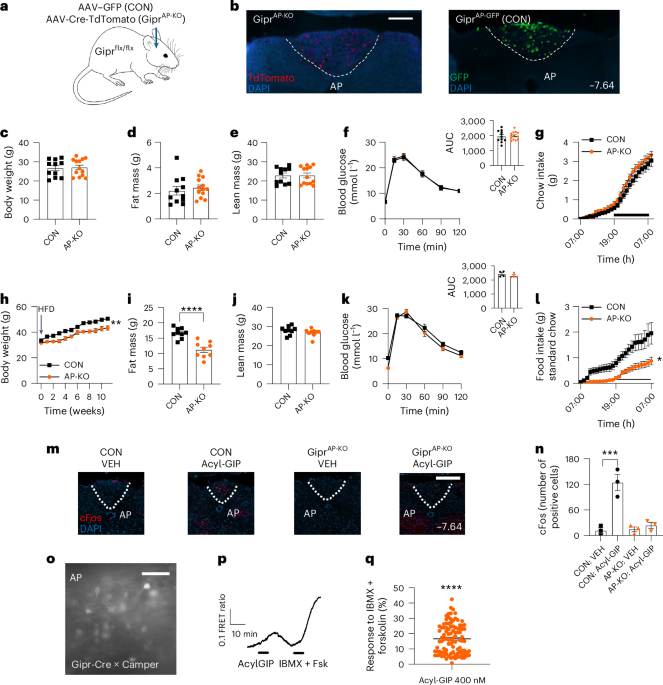
Nature reported a mouse study examining why both activation and blockade of the glucose-dependent insulinotropic polypeptide receptor, or GIPR, can contribute to weight loss when paired with GLP-1 receptor drugs. The work focused on two brain areas: the area postrema in the brainstem and the hypothalamus, using region-specific deletion of Gipr in mice to test effects on appetite, body weight and responses to metabolic drugs.
According to the paper, removing Gipr in the area postrema reduced mice’s responsiveness to the appetite-suppressing effects of a GIPR agonist, acyl-GIP. These mice also showed partial protection from diet-induced obesity on a high-fat diet, while the weight-loss effect of the GLP-1 receptor agonist liraglutide and the added effect of a GIPR antagonist were broadly similar to controls.
By contrast, mice lacking Gipr in the hypothalamus retained normal appetite suppression from acyl-GIP, but showed greater weight loss with liraglutide than control mice. In these animals, the additional weight-loss effect normally seen when a GIPR antagonist was combined with liraglutide was lost. The authors also reported that GIPR antagonism and hypothalamic Gipr deletion increased sensitivity to cagrilintide-induced weight loss.
The findings matter because drugs targeting GLP-1 and GIP pathways, including dual agonist approaches used in obesity and type 2 diabetes treatment, have raised unresolved questions about GIP’s mixed biology. The study suggests that GIPR agonism and antagonism may influence body weight through different neural sites, with the area postrema linked to appetite suppression from agonism and hypothalamic receptors implicated in antagonist-enhanced weight loss.
Loading debate for this article…
Other publishers covering this story
No additional verified coverage is currently clustered with this report.
Related reporting
 Medicine shortages undermining village health teamsThe Observer
 Depression: Walking Through the Three Corners of Life Toward HealingNile Post
 Ebola: Uganda Reinstates Traveller Locator FormsNile Post
 Uganda remains Ebola-free as Health ministry probes Nigerian traveller infected with virus - Daily MonitorDaily Monitor
 Atwine Warns Border Officers Over Ebola Screening Lapses at MpondweNile Post
 Rising patient numbers strain Bulucheke Health Centre IVThe Independent Uganda