
Astronomers may have discovered the 1st moon outside of our solar system — or is it something weirder? - Space
What the report says
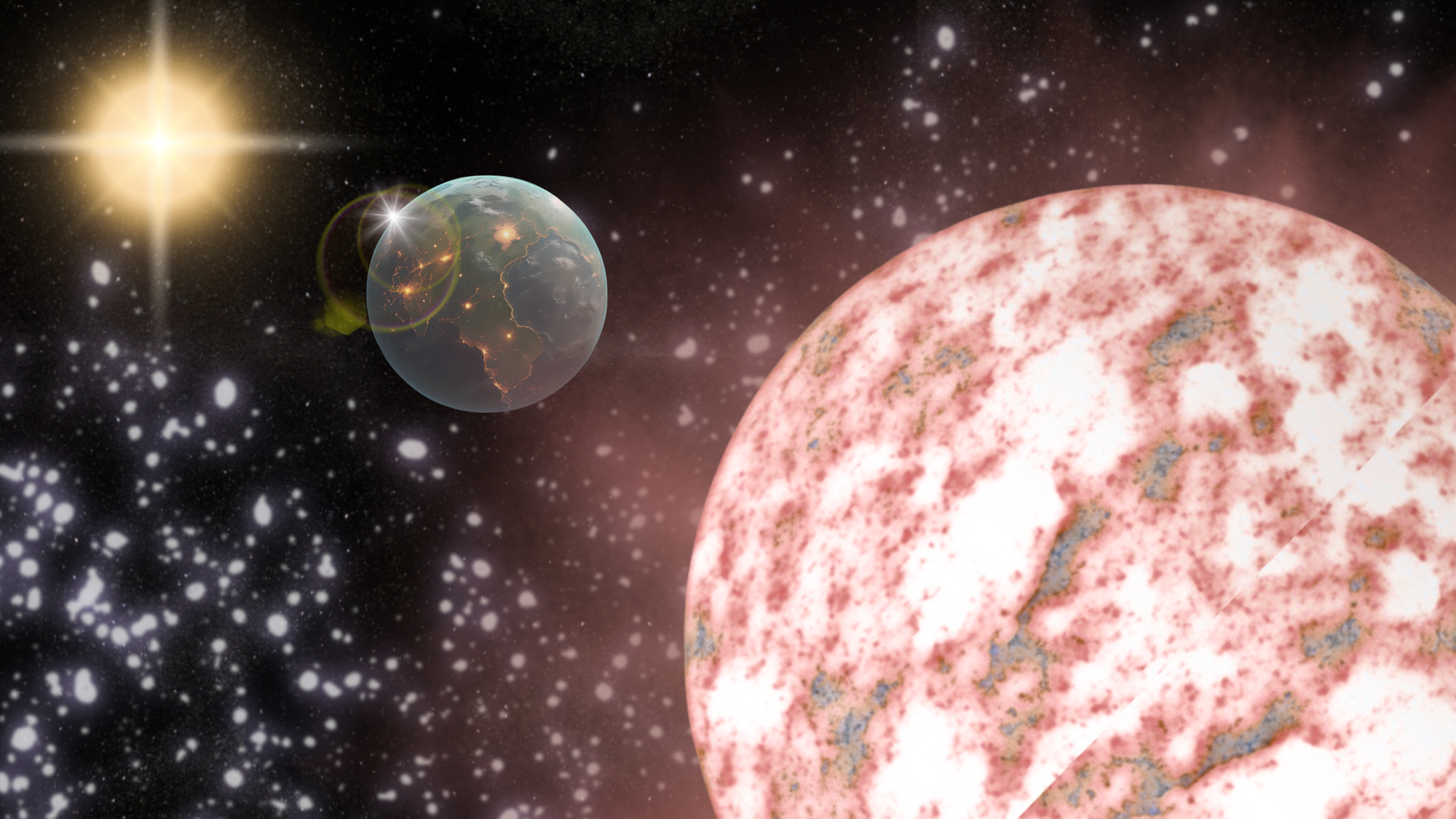
Space.com reports that astronomers studying the nearby star system CD-35 2722 may have found a first-of-its-kind object: a massive satellite outside the solar system that could be described as an exomoon, though its classification is not straightforward. The system, about 73 light-years from Earth, contains a star roughly half the sun’s mass and a brown dwarf — an object often called a “failed star” because it forms like a star but lacks enough mass to sustain hydrogen fusion.
Using the Very Large Telescope, researchers identified a large gaseous body orbiting the brown dwarf rather than a conventional planet. Kevin Hoy of Universidad Diego Portales and Chile’s Millennium Nucleus of Young Exoplanets and their Moons said in a statement that the system is difficult to describe with familiar solar-system terms, because the object is massive enough to be considered planet-like but does not orbit a star directly.
The finding, published Wednesday in Nature, adds complexity to the long-running search for moons beyond the solar system. More than 6,000 exoplanets have been confirmed in NASA’s catalog, but no exomoon has yet been definitively confirmed. Team member Alice Zurlo said the CD-35 2722 system blurs the boundaries between stars, planets and moons, making terminology difficult.
Space.com notes that the researchers can more confidently call the body an “exosatellite,” meaning a satellite beyond the solar system, even if its future label remains unsettled. The discovery underscores how varied planetary systems can be and suggests that more powerful observatories, including the Extremely Large Telescope now being built in Chile, could help clarify whether similar objects are moons, planets or something that requires broader definitions.
Loading debate for this article…
Other publishers covering this story
No additional verified coverage is currently clustered with this report.
Related reporting
 Argentinian judge drops fraud investigation into Milei over crypto scandalAl Jazeera
 Syrians protest Israel’s incursions near occupied Golan HeightsAl Jazeera
 WHO announces start of Ebola vaccine clinical trial in DR CongoAl Jazeera
 At least 9 killed in clashes in Ethopia, driving more than 2,000 to flee to KenyaAnadolu Agency Africa
 Iran war live: Israel launches ‘targeted’ Hebron operation after attackAl Jazeera
 Sudan: Drone Strikes Killed At Least 306 People in Three WeeksAllAfrica