
A star near the centre of our galaxy reaches almost 3 per cent of the speed of light as it is whipped around something four million times the mass of the Sun that emits no light of its own — and tracking its orbit for nearly three decades helped two astronomers wi - Space Daily
What the report says
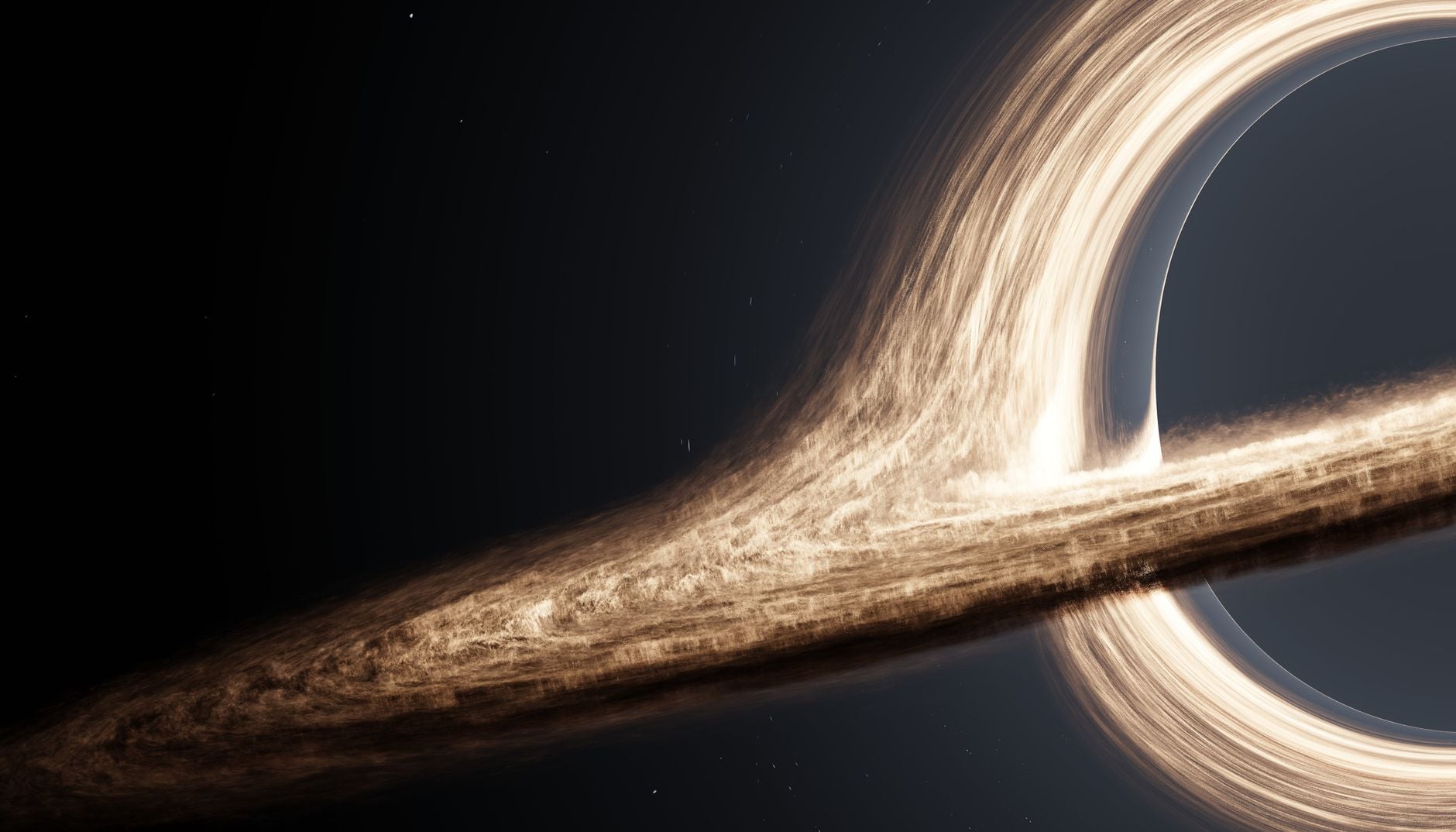
Space Daily reports that long-term observations of the star known as S2, or S0-2 to the Keck Observatory team, provided crucial evidence for Sagittarius A*, the supermassive black hole at the Milky Way’s centre. The star, located about 26,000 light-years from Earth, follows a highly stretched orbit around an unseen gravitational source and reached roughly 7,650 kilometres per second near its closest approach — about 2.55% of light speed.
According to the report, teams led by Reinhard Genzel using European Southern Observatory facilities in Chile and Andrea Ghez using the Keck telescopes in Hawaii tracked S2 and nearby stars for almost three decades. Because dust blocks visible light from the galactic centre, the observers relied on infrared measurements and increasingly advanced techniques, including speckle imaging, adaptive optics and the GRAVITY instrument at ESO’s Very Large Telescope Interferometer.
The orbital data showed that about 4.3 million solar masses are packed inside S2’s closest approach, roughly 120 astronomical units from the centre. Space Daily explains that alternative possibilities, such as a dense cluster of dark stellar remnants, became increasingly implausible because such a system would not remain stable long enough. A single supermassive black hole remained the best explanation.
The observations also tested Einstein’s general relativity. S2’s light showed relativistic redshift effects during its 2018 close passage, and later measurements found the slow rotation of its orbit, known as Schwarzschild precession. The work helped Genzel and Ghez share the 2020 Nobel Prize in Physics, alongside Roger Penrose, for identifying the compact object at the centre of the galaxy.
Loading debate for this article…
Other publishers covering this story
No additional verified coverage is currently clustered with this report.
Related reporting
 Ballon d’Or 2026 predictions: Yamal, Mbappe and Kane – who will win?Al Jazeera
 Lula thanks Brazil’s youth for historic election winAl Jazeera
 Brazil election results 2026: Key takeaways from Lula’s historic winAl Jazeera
 Seoul ‘fabricated” landmine blast, North Korea tells UN in letterAl Jazeera
 Two storms slam northern Europe, cut power to 150,000 homesAl Jazeera
 Netanyahu rival Eisenkot holds final rally before Israeli electionAl Jazeera