
2 meteor showers peak on the same night this week — how to get the best views, despite a near-full moon - Live Science
What the report says
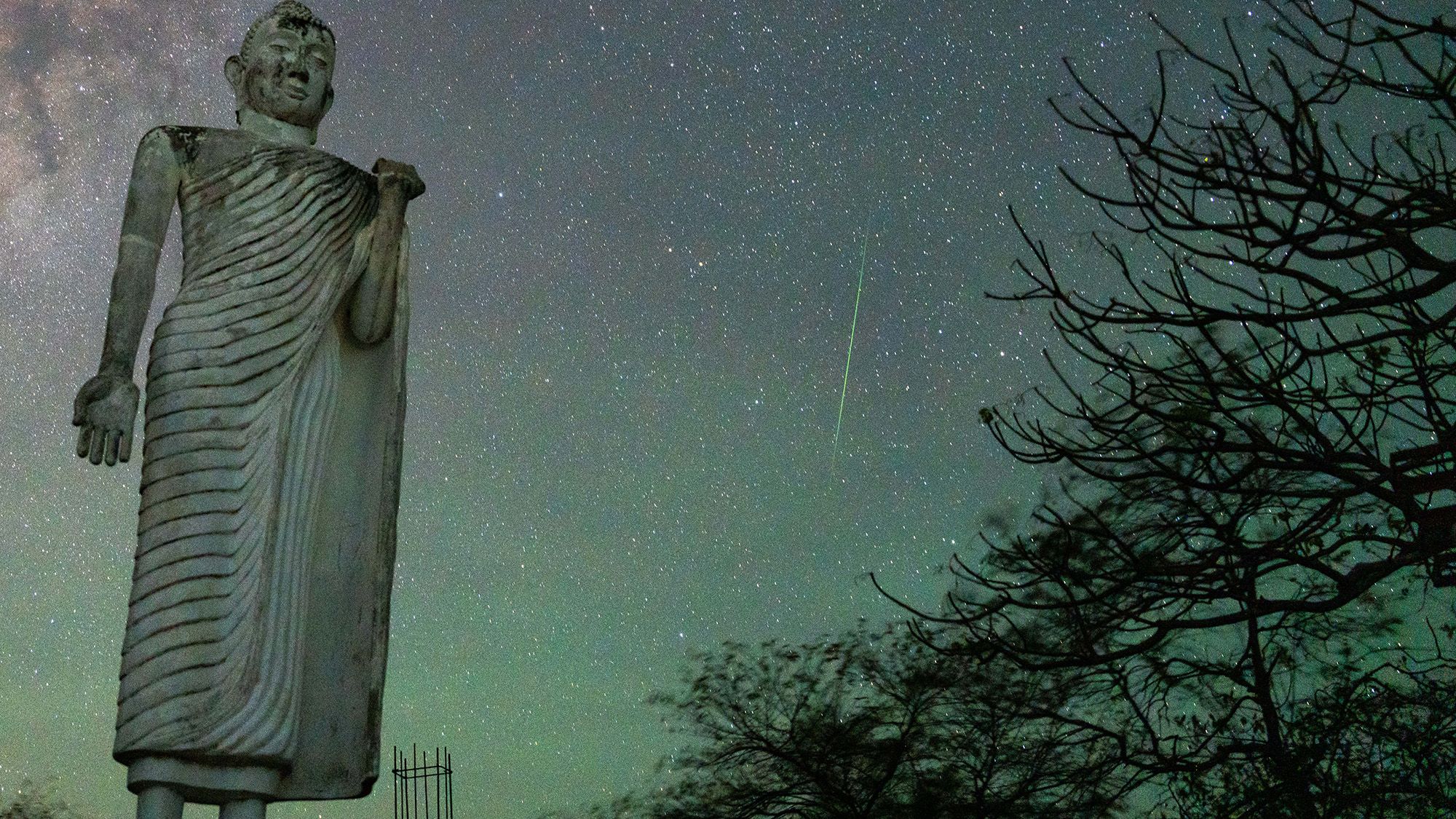
Live Science reports that two meteor showers — the Southern Delta Aquariids and the Alpha Capricornids — are expected to peak on the same overnight period, July 30-31, effectively opening the late-summer “meteor season.” The timing is not ideal for viewing because the peak comes just after July’s full Buck Moon, with the American Meteor Society cited as saying the moon will still be 98% full and likely to obscure many dim meteors.
According to the report, the Southern Delta Aquariids are active from July 12 to Aug. 23 and can produce about 25 meteors per hour in dark, favorable conditions. This year’s bright moonlight is expected to make that shower harder to see because its meteors are often faint and usually do not produce many fireballs. The Alpha Capricornids, active from July 3 to Aug. 15, are less prolific at roughly five meteors per hour, but they are noted for occasional bright fireballs.
Live Science says the best viewing window will be from midnight to dawn, when Aquarius, the apparent source point for the Southern Delta Aquariids, is highest in the southern sky. Viewers in the southern United States, Mexico and the Caribbean should have a better geometry than those farther north. The article recommends blocking the moon with a building, tree or hill and looking toward the darkest available sky, using the naked eye rather than optical equipment.
The report adds that skywatchers may get a better chance in August, when the Perseid meteor shower peaks on Aug. 12-13 around a new moon, creating darker viewing conditions.
Loading debate for this article…
Other publishers covering this story
No additional verified coverage is currently clustered with this report.
Related reporting
 Ballon d’Or 2026 predictions: Yamal, Mbappe and Kane – who will win?Al Jazeera
 Lula thanks Brazil’s youth for historic election winAl Jazeera
 Brazil election results 2026: Key takeaways from Lula’s historic winAl Jazeera
 Seoul ‘fabricated” landmine blast, North Korea tells UN in letterAl Jazeera
 Two storms slam northern Europe, cut power to 150,000 homesAl Jazeera
 Netanyahu rival Eisenkot holds final rally before Israeli electionAl Jazeera